01
Footing below the frost line
Steps start on a real footing set below the local frost depth so winter freeze can't heave them away from the house.
Even, code-conscious steps that match the house, footed below frost so they don't heave, and tied in clean.
Credibility comes from how it's built, not from promises. Here's the order of operations on every concrete steps & stairs job.
Steps start on a real footing set below the local frost depth so winter freeze can't heave them away from the house.
Riser heights are kept even and within code so the stairs are comfortable and safe to climb.
We reinforce the pour so the steps hold their edges and corners through the freeze-thaw seasons.
A broom or textured finish gives footing in snow, ice, and rain, and we can add grit where it matters.
The new work is tied neatly into the existing porch, slab, or walkway.
Most contractors vanish after the deposit. We pick up the phone, show up when we say, and stand behind the work after the truck leaves. The follow-through is the difference.
A foreman we know runs your job and a vetted crew does the work, managed by Lucky's, one company accountable from the first call to the final walkthrough.
COI and lien waivers on file before we break ground. The documentation that lets commercial clients pay and gives homeowners peace of mind.
Prepped subgrade, reinforced and mixed to spec for the job, and proper curing. We build credibility through the process, not promises. On concrete steps & stairs, that starts with footing below the frost line.
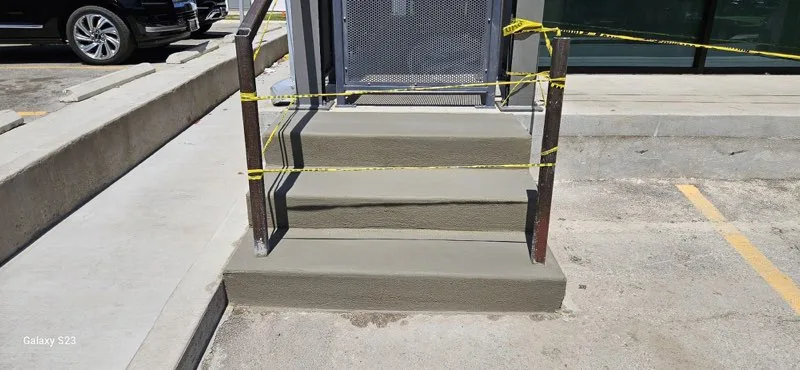
Concrete steps are usually priced per set rather than per square foot, based on the number of risers, the footing depth (set below the frost line up here), and how they tie into the house. A typical set runs about $300 to $500 per step as a starting range. We give you a firm number after seeing the entry.
Usually a footing that didn't go below the frost line, so water freezes under it and heaves it. We set footings to the local frost depth so the steps stay put through the winter.
We keep risers even and within local code so every step feels the same underfoot, since uneven risers are both uncomfortable and a trip hazard, worse when they're iced.
It depends on the damage. Surface spalling from de-icers can sometimes be patched, but a heaved footing or broken risers usually means a rebuild. We'll tell you straight which one you're looking at.
We pour and finish the steps and set anchor points for railings, then coordinate the railing install so the steps meet your access and winter-safety needs.
Foot traffic usually waits a few days while the concrete gains strength, longer in cold weather. We give you the specific timeline for your pour before we start.
We carry step and stair footings below the local frost line, around 36 inches in the Denver area, so the steps don't heave when the ground freezes. Skipping frost-depth footings is why so many older entry steps in Denver pull away from the house.
You'll hear back from a real person, usually the same day. No call center, no runaround, no chasing us down.
Booking up fast this season. Or call (720) 619-6545